The Structural Role of Silicone Bonding to Laminated Glass Interlayer
Downloads
DOI:
https://doi.org/10.47982/cgc.10.765Published
Issue
Section
License
Copyright (c) 2026 Graham Coult, Efstratios Volakos, Valérie Hayez, Allan Gibson

This work is licensed under a Creative Commons Attribution 4.0 International License.
Abstract
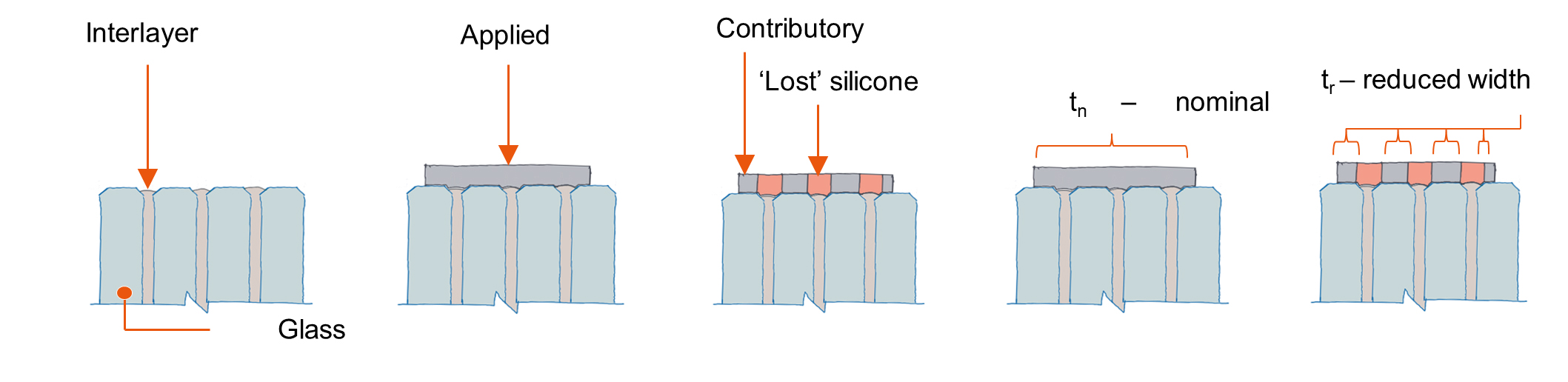
Structural silicone glazing (SSG) design typically neglects the adhesive contribution of silicone bonding to glass laminate interlayers, leading to conservative assumptions and increased material use. This study investigates the adhesion characteristics of a commercially available high-performance silicone structural glazing (SSG) sealant to two widely used laminated glass interlayer materials: polyvinyl butyral (PVB) and ionoplast (silicone-interlayer bond strength and durability were experimentally assessed under tensile and shear loading using both non-aged and artificially aged H-shaped specimens. The results indicate that silicone–interlayer adhesion exceeds the intrinsic strength of the silicone, contributing to load transfer in SSG joints. These findings suggest that accounting for interlayer adhesion could improve structural efficiency in applications such as glass fins by increasing the effective bite, thereby eliminating the need for additional glass thickness reduction of silicone volume.