Downloads
DOI:
https://doi.org/10.47982/cgc.10.751Published
Issue
Section
License
Copyright (c) 2026 Jürgen Neugebauer

This work is licensed under a Creative Commons Attribution 4.0 International License.
Abstract
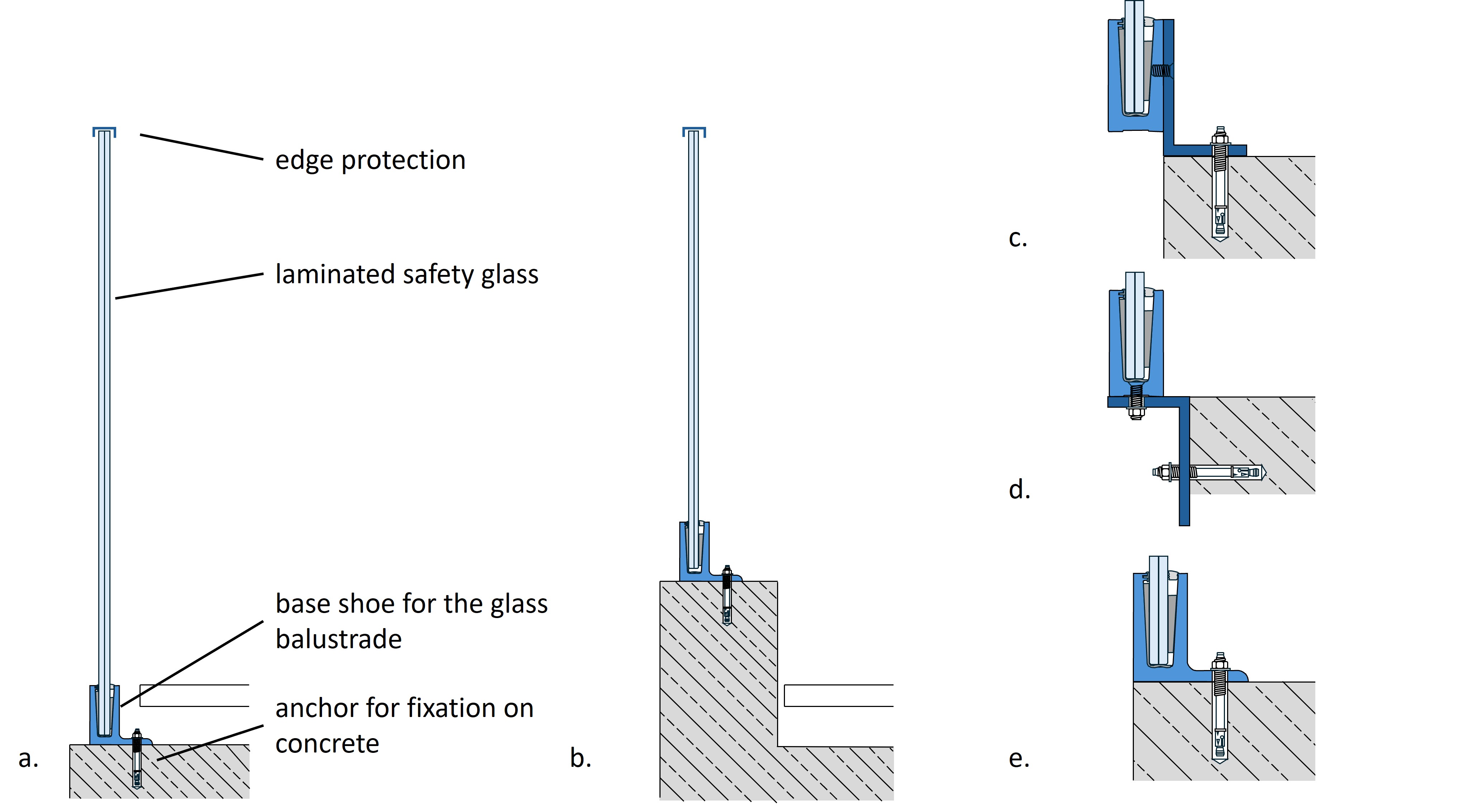
Transparency is considered a defining feature of contemporary architecture, both in social housing and single-family homes. Glass balustrades are gaining increasing importance as they combine functionality, safety, and aesthetic lightness. Particularly popular are all-glass balustrades with bottom edge clamping, which do not require visible steel posts or profiles, contributing to a clear and minimalist architectural expression. Despite their filigree appearance, these constructions must meet high safety and structural requirements. With the ongoing development of relevant standards and guidelines, especially the forthcoming EUROCODE for structural glass design, requirements for impact and fall protection, as well as for preventing hazards caused by falling glass fragments, are increasingly specified. The aim is to ensure the safe and code-compliant use of glass elements in architecture. This paper focuses on the dynamic verification of fall protection for bottom-clamped all-glass balustrades and compares different verification methods of pendulum impact testing: test certificates from system manufacturers, experimental procedures, and numerical simulations using suitable analysis programs. The advantages and disadvantages of each assessment, as well as existing normative gaps and uncertainties, are discussed. Finally, experimental results are compared with numerical simulations to evaluate the validity and practical applicability of the verification methods.