DOI:
https://doi.org/10.47982/cgc.10.769Published
Issue
Section
License
Copyright (c) 2026 Chiara Bedon, Yu Wang, Nicola Cella, Marco Fasan, Grunde Joomas, Andrea Lucherini

This work is licensed under a Creative Commons Attribution 4.0 International License.
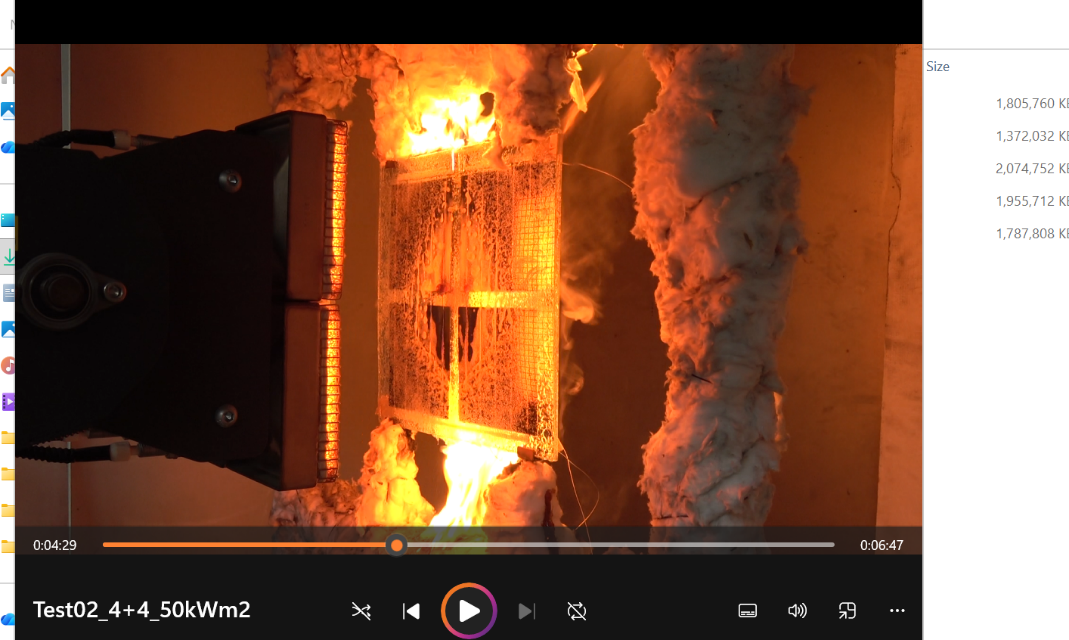
Abstract
An experimental and numerical investigation on the behaviour and failure mechanisms of glass-glass building-integrated photovoltaic (BIPV) modules for facades when exposed to fire was carried out to assess the thermal performance of point-fixed BIPVs (40 × 40 cm their size and 4+4 mm the glass thickness). A high-performance radiant panel system was employed to reproduce controlled thermal exposure for 600 seconds at 50 KW/m2 and to monitor some key parameters, including the temperature evolution, the fracture initiation, and the associated failure modes. Transient heat transfer simulations were carried out to account for the thermo-physical interaction of the BIPV components, and the numerical estimates were used to extend the experimental observations for the first 200 seconds of heating. The experimental results provided valuable insights into the fire behaviour and structural integrity of BIPV systems, highlighting the dominant factors that govern their collapse when involved in a fire. Also, the modelling approach was able to capture the most important temperature trends. However, there are some numerical limits and uncertainties that should be properly considered. The obtained findings contribute to a broader understanding of the fire performance of BIPV facades and support the development of safer design strategies for their behaviour under thermal and mechanical actions.