Downloads
DOI:
https://doi.org/10.47982/cgc.10.768Published
Issue
Section
License
Copyright (c) 2026 Chiara Bedon, Nicola Cella, Luca Cozzarini

This work is licensed under a Creative Commons Attribution 4.0 International License.
Abstract
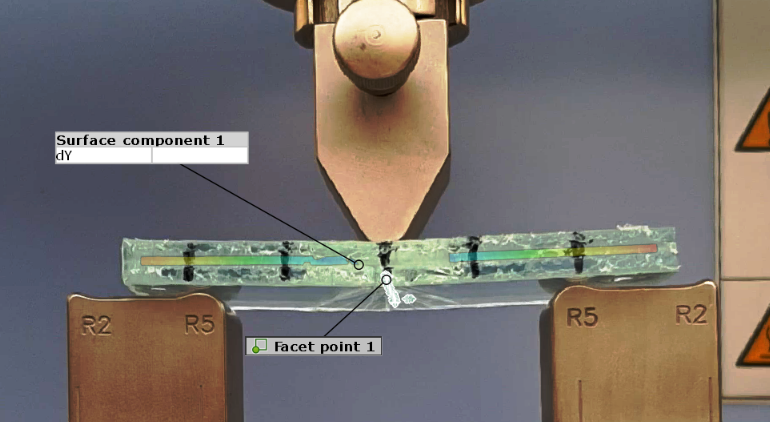
The post-breakage security and structural safety analysis and quantification for laminated glass (LG) elements in constructions is a critical issue, and a rather challenging task, due to many influencing parameters and interconnected aspects that are hard to control and quantify. From a practical point of view, among many others, the glass type (and thus the associated size and shape of shards) is one of the most important influencing parameters for the residual capacity assessment in case of damage. The quantification of this residual capacity is carried out in this paper by introducing a sound estimation of the equivalent modulus of elasticity for cracked glass. To this aim, small-scale 2-ply LG specimens are investigated in a cyclic 3-point-bending (3PB) setup, with partial fracture corresponding to the “STAGE 2” of damage propagation for 2-ply LGs. A total of 57 tests is carried out, considering different parameters, such as the interlayer type and thickness, the glass thickness, the imposed deformation rate and amplitude. The comparative analysis of experimental results gives evidence of rather interesting mechanical performances in out-of-plane bending, which are certainly affected by the presence of a broken glass layer in STAGE 2, but still ensuring (even under a cyclic protocol) an interesting residual capacity for the damaged LG section.