Reinventing the Heritage Steel Window
Downloads
DOI:
https://doi.org/10.47982/cgc.10.752Published
Issue
Section
License
Copyright (c) 2026 Charis Cosmas, Hugh McGilveray, Nathan Cooper, Christian Fredrix, Maria Dimas, Sarah Hoogenboom

This work is licensed under a Creative Commons Attribution 4.0 International License.
Abstract
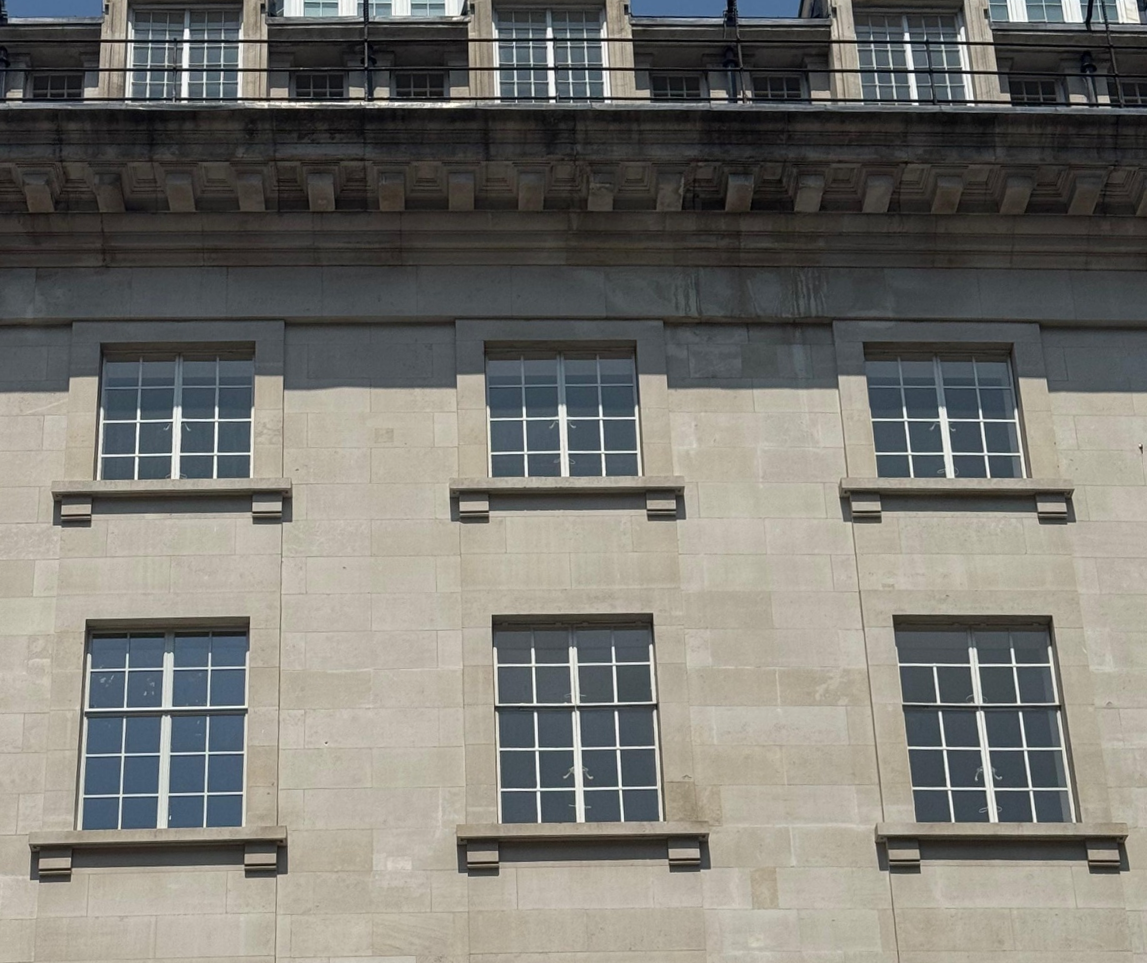
Net zero ambitions for London’s heritage buildings have long been constrained by conservation requirements that retain poorly performing historic windows or reliance on secondary glazing, limiting gains in thermal performance, airtightness, acoustics, and usability. Between the 1920s and 1960s, single-glazed, non-thermally broken rolled steel window profiles were widely used and are now valued for their slender sightlines and refined detailing. However, they perform poorly by modern standards. While modern systems offer significantly improved performance, they are typically considered unsuitable for listed buildings because their proportions and detailing diverge from original windows. This paper describes a collaborative initiative by Eckersley O’Callaghan, The Crown Estate, Royal MHB, and others to develop a high-performance window system that faithfully replicates the heritage aesthetic. The project operated across three strands: Conservation; close consultation ensured the architectural significance of the original windows was preserved, Whole-building performance; portfolio-wide energy assessments demonstrated a clear whole-life carbon benefit, and Product performance; rigorous design and product testing validated performance. The system has successfully progressed through engagement with Westminster heritage stakeholders, securing planning permission for the installation of a compliant, conservation-sensitive window system in a Grade II listed building with a view to rolling out onto other London assets and beyond.