Downloads
DOI:
https://doi.org/10.47982/cgc.10.721Published
Issue
Section
License
Copyright (c) 2026 Stefan Wenzel, Paul Müller, Christian Schuler

This work is licensed under a Creative Commons Attribution 4.0 International License.
Abstract
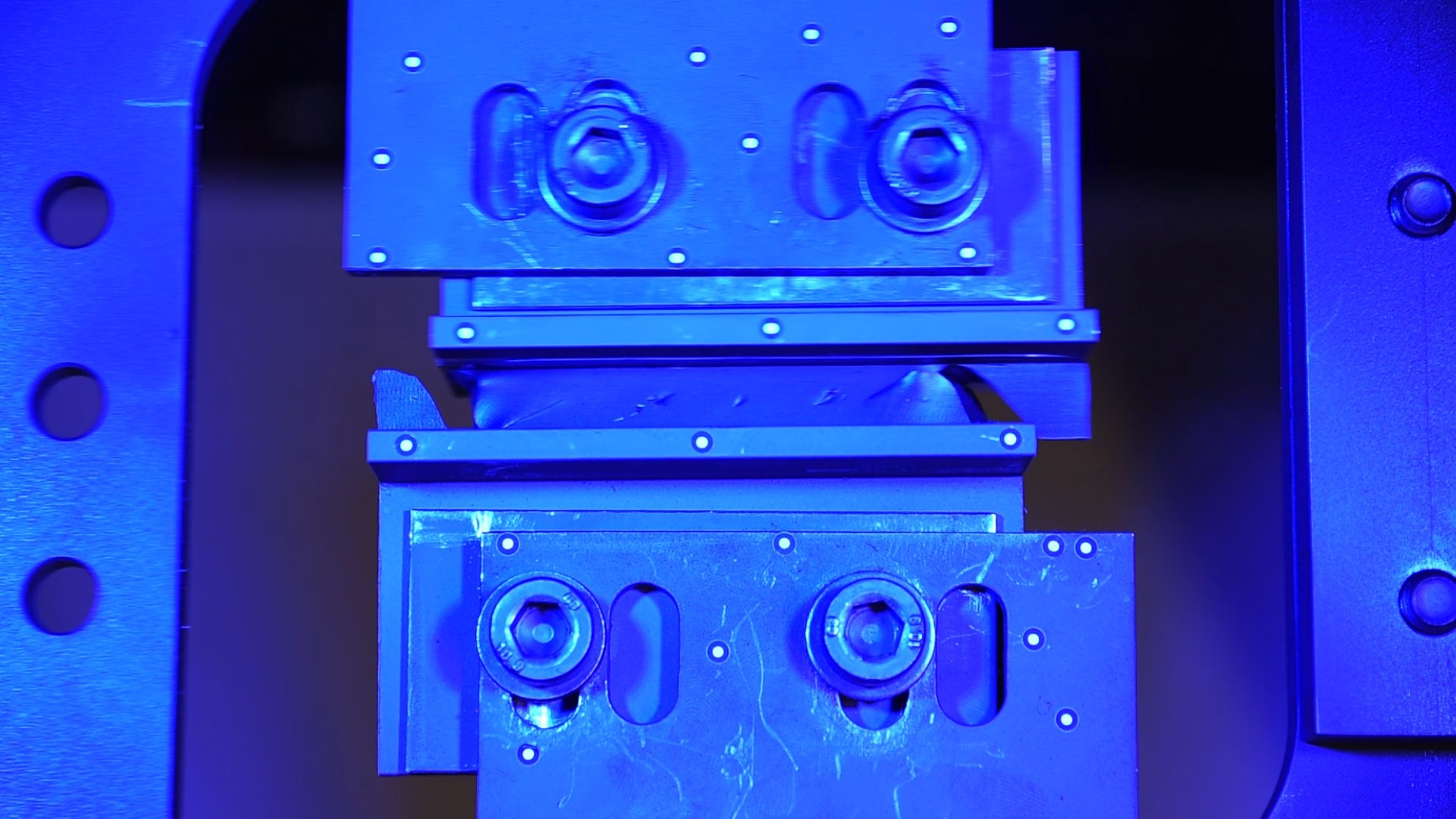
This study presents an AI-based methodology for the quantitative evaluation of crack propagation in cyclically loaded thick-layer silicone adhesive joints used in structural glazing systems. Experimental shear tests under low cycle fatigue loading were recorded with a DSLR and analyzed using a convolutional neural network for crack detection and segmentation. A dedicated dataset was generated from video frames and annotated to capture varying crack geometries and substrate positions. Real-time object detection-based segmentation models were trained and systematically optimized through hyperparameter tuning. To address deformation-induced crack distortion, a linear back-calculation was implemented to transform detected crack geometries into an undeformed reference state. This enables the extraction of normalized crack metrics independent of instantaneous deformation. The automated measurements were validated against manual reference evaluations, showing reproducible accuracy across multiple specimens. Increasing input resolution was associated with improved geometric agreement, while training stability depended on an appropriate balance of model complexity. The proposed approach extends conventional experimental evaluation by enabling continuous, image-based crack assessment throughout cyclic loading. This provides a basis for the future evaluation of adhesive joint performance under low-cycle fatigue conditions while accounting for the actual crack propagation behavior.