DOI:
https://doi.org/10.47982/cgc.10.717Published
Issue
Section
License
Copyright (c) 2026 Alina Gutjahr, Michael Engelmann

This work is licensed under a Creative Commons Attribution 4.0 International License.
Abstract
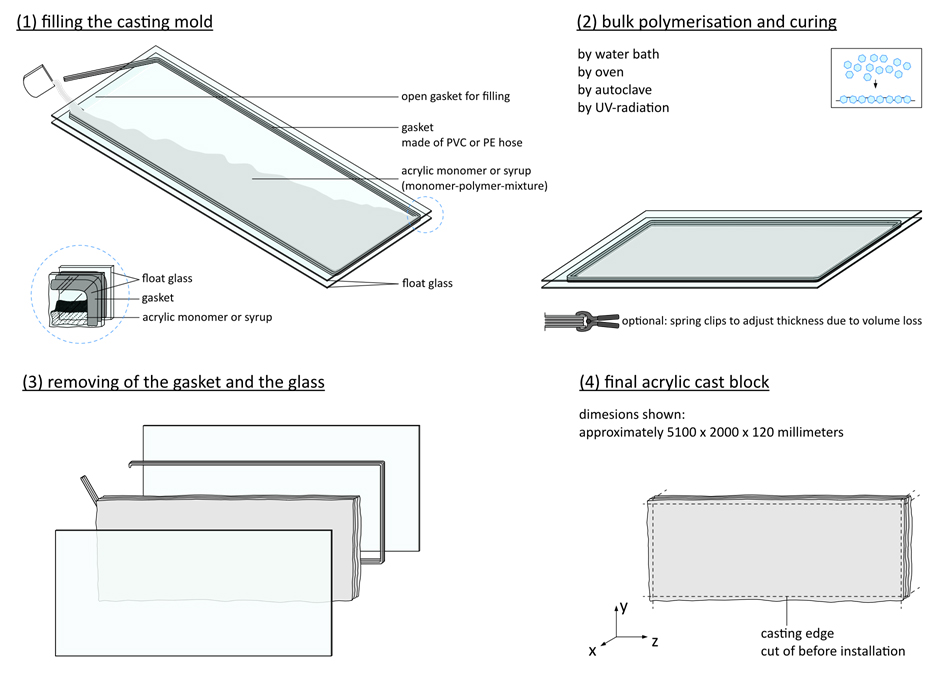
Cast monolithic acrylic blocks with thicknesses over 25 up to 150 mm are particularly used for large glazing applications such as aquariums and pools. However, there are currently no regulations for cast blocks of this thickness. It is essential to obtain reproducible measurements of mechanical material properties using tensile and three-point bending tests. Recommendations for specimen preparation are missing, even though it is known from glass engineering that the brittle fracture of PMMA also originates from surface cracks and flaws. This study investigates the influence of different types of cutting edges, additional edge finishing, specimen orientation within the block, thermal treatment (annealing) and specimen size. The influence of the investigated parameters on the mechanical properties of PMMA (polymethyl methacrylate) was determined, with a focus on strength, modulus of elasticity and maximum elongation. To this end, specimens were prepared using various machining processes including sawing, milling, laser cutting and waterjet cutting and subsequently tested under tensile and three-point bending tests. The results show that the type of edge trimming has a significant effect on the maximum elongation and strength measured in the tests. These findings highlight the necessity of considering manufacturing processes during mechanical testing of PMMA to ensure reliable and reproducible results.