Kiln Casting with Non-Compatible Glasses for Artistic Innovation
Downloads
DOI:
https://doi.org/10.47982/cgc.10.695Published
Issue
Section
License
Copyright (c) 2026 Gregory Alliss

This work is licensed under a Creative Commons Attribution 4.0 International License.
Abstract
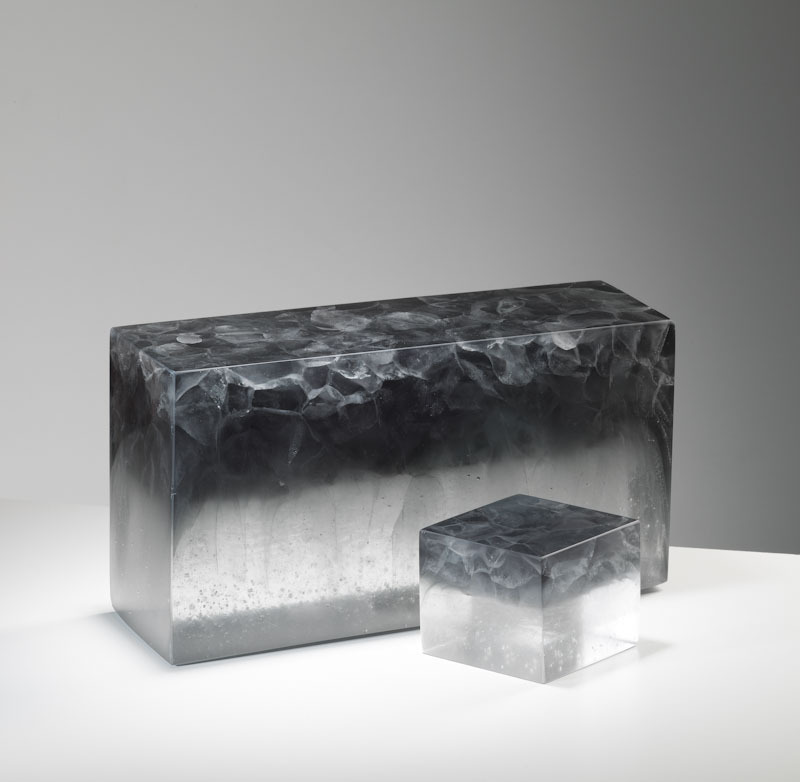
The production of glass art objects using traditional kiln casting adheres strictly to compatibility standards, primarily coefficient of expansion (COE), to avoid stress fractures and ensure structural integrity. However, rigid adherence to compatibility rules can limit creative material diversity and aesthetic expression. This paper explores a practice-led investigation into the deliberate ‘in-kiln’, combination of different types of ‘non-compatible’ glasses. This is not a fusing process it is casting process. This innovative process challenges conventional limitations to expand aesthetic and conceptual possibilities in contemporary glass casting. Through rigorous studio experimentation, this technique has developed to stage that has successfully produced both series of test and finished art objects. The practical studio investigation is supported by a highly developed theoretical understanding of the topic. Most of the objects made using this technique combine highly contaminated waste recycled glass with conventional clear studio casting glasses. The main highly contaminated waste glass used in this investigation was recycled Cathode Ray Tube (CRT) glass sourced from the older style television screens. This approach offers new directions for art kiln-cast glass. The approach is applicable to larger scale objects and for use in architectural applications.