Downloads
DOI:
https://doi.org/10.47982/cgc.10.668Published
Issue
Section
License
Copyright (c) 2026 Michael Peter Mayrhofer, Philipp Kiesslich, Andreas Taras, Vlad-Alexandru Silvestru

This work is licensed under a Creative Commons Attribution 4.0 International License.
Abstract
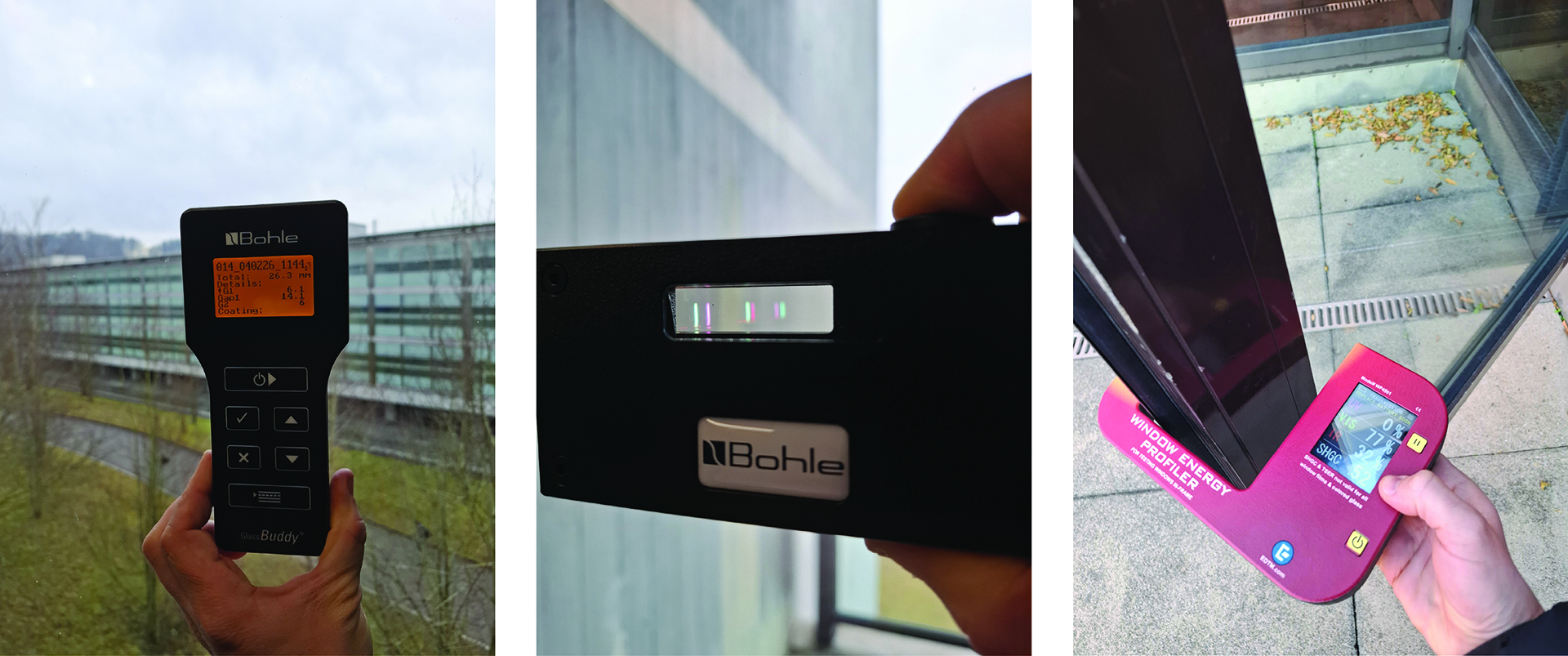
Assessing the potential for reusing glass from existing windows and façades requires a systematic understanding of the systems, glazing assemblies, glass types, and glass dimensions that were applied over the years, as well as the requirements these systems had to fulfil. Existing façade and window systems largely determine the feasibility and effort required for disassembly, as well as the possibility to recover reusable or recyclable components or materials. Glazing assemblies and glass types from end-of-life façades and windows might limit the possibilities for further processing, while element dimensions might impose constraints on future façade designs based on reuse. This paper presents a systematic investigation of the glazing from nine educational and research buildings with metal-framed façades or windows, constructed or refurbished between 1967 and 2013. The available amount of glass was documented with respect to number, dimensions, assembly, and layer thicknesses. In-situ measurements of thermal and light transmittance were conducted and compared with software-based calculations. Furthermore, the structural performance of selected glazing assemblies was evaluated in relation to current design standards. The results provide a representative basis for assessing the reuse potential of existing glazing in metal-framed façades and identify key characteristics and challenges expected to influence disassembly, separation processes, and future circular façade design strategies.